Two different jobs
Absorption reduces the sound that reflects around inside a room. Porous, soft materials such as mineral wool, felt, fabric-wrapped panels and thick rugs turn part of the sound energy that strikes them into a tiny amount of heat. The room sounds less hard, voices carry less far by reflection, and the general build-up of noise is calmer.
Isolation, sometimes called sound insulation, reduces the sound that passes from one space into another. It depends on mass, airtightness, separation between layers and careful detailing at joints. A thin layer of foam on a wall will barely change it.
The most common disappointment in quiet office design comes from mixing these up: buying absorbent panels to stop a neighbour's voice, or building a glass partition and finding the room inside still echoes. Your observation log should already suggest which job you need.
Comparison rows
| Aspect | Absorption | Isolation |
|---|---|---|
| What it changes | Reflections and reverberation inside the room | Sound passing through walls, doors, floors and ceilings |
| Typical means | Ceiling tiles and baffles, wall panels, rugs, curtains, upholstered furniture | Heavier or double-layer walls, solid-core doors, perimeter seals, sealed penetrations |
| Where it acts | On surfaces inside the space you occupy | In the construction between spaces |
| Helps with | Echo, a busy “hard” feel, build-up of voices across a room | Neighbours, meeting rooms, corridors, plant rooms |
| Does little for | Sound arriving through a wall or door gap | Echo within your own room |
| How it is rated | αw and absorption class (ISO 11654), NRC (from ASTM C423) | Rw (ISO 717-1), STC (ASTM E413) |
| Who usually installs | Often the occupant or a fit-out supplier | Usually the landlord, a contractor or a specialist |
Soft materials make a room calmer to be in. Mass and airtightness keep sound where it belongs.
Ceiling first, then floor and walls
In most offices the ceiling is the largest uninterrupted surface, and it reflects speech across the room above everyone's heads. If it is bare concrete or plaster, absorption there is usually the most effective first move. Suspended baffles or rafts can work where a full ceiling is not possible.
Floors come next. A hard floor carries footsteps and chair noise; a rug under a desk cluster softens both. Wall panels help most at head height near seated people, and on walls that face each other and create flutter between parallel surfaces.
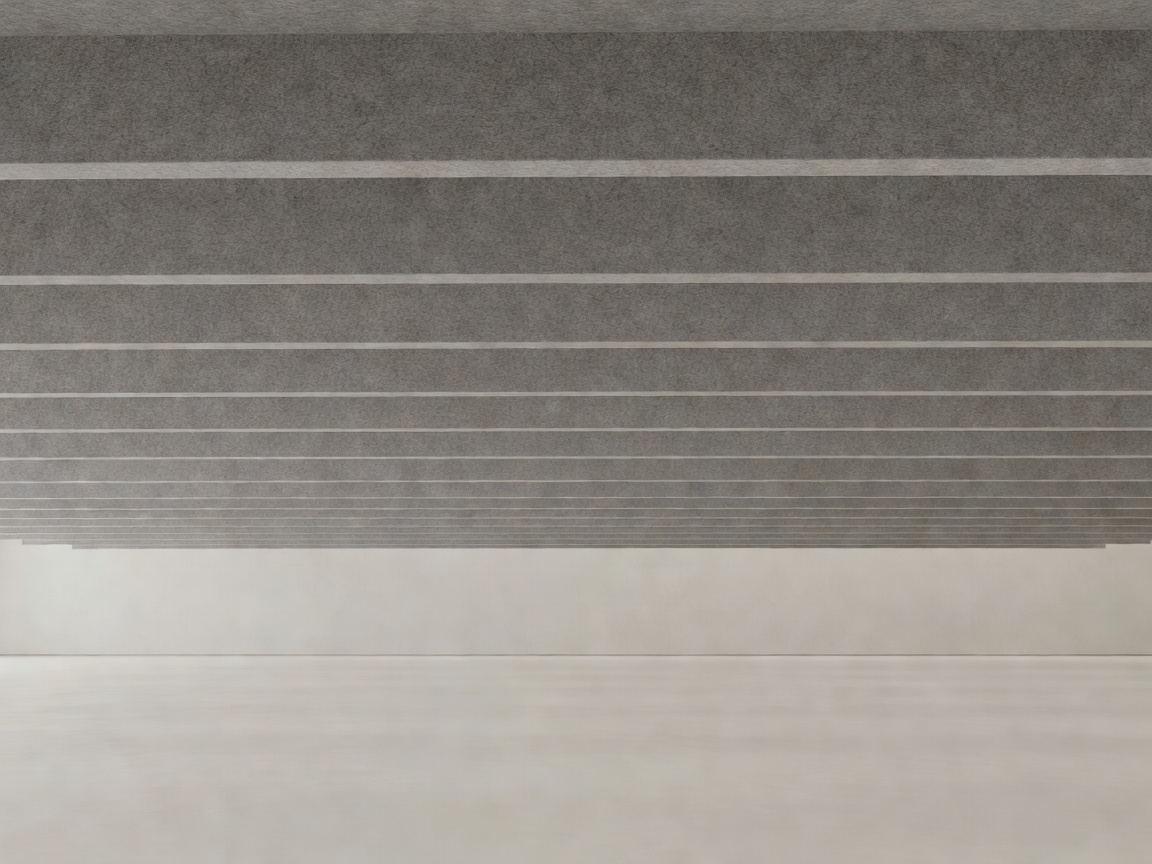
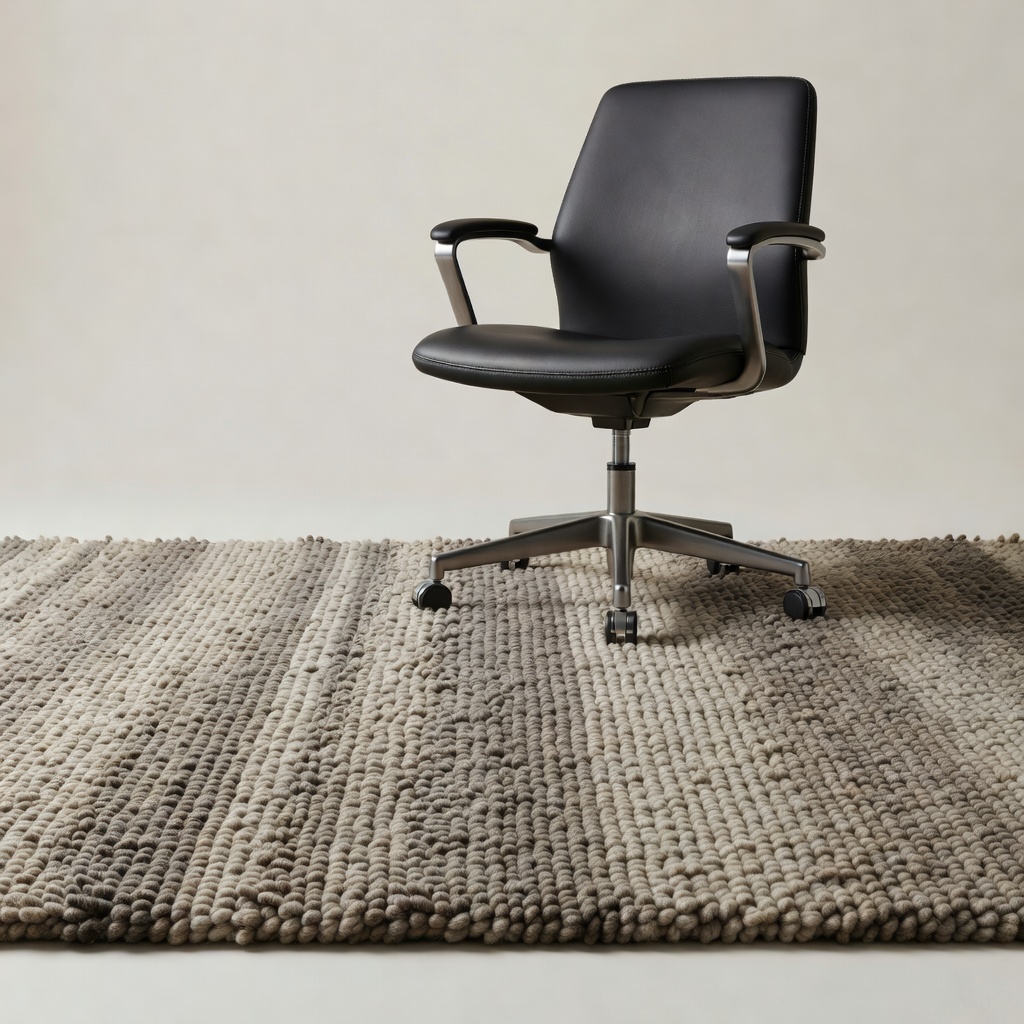

Furniture counts too. Upholstered seating, bookcases filled with irregular objects and curtains all add absorption and some scattering. These are rarely enough on their own in a large hard room, but they matter in small rooms and at home.
Reading product data calmly
Absorption products are often described by a weighted absorption coefficient, αw, and a class from A (most absorbent) to E under ISO 11654, or by a Noise Reduction Coefficient (NRC) derived from the American method ASTM C423. Isolation is usually described by Rw under ISO 717-1 or by Sound Transmission Class (STC) under ASTM E413.
Three cautions apply. Laboratory values describe a sample mounted in a specific way, not your room. Ratings from different systems are not interchangeable. And the area of treatment, its position and the size of the room matter as much as the rating itself. Be wary of any seller who promises a specific reduction without knowing your room. We do not publish such figures, because they cannot be honest without measurement.
Also check the fire classification. In Europe, reaction-to-fire is commonly classified under EN 13501-1, and ceiling-hung items must be fixed to suit their weight.
When isolation is the real need

If voices from a meeting room reach your desk, look at the weakest point first. Sound travels through gaps remarkably well: an undercut door, an unsealed frame or a shared ceiling void above a partition can undo a well-built wall. Solid-core doors, perimeter seals and drop seals at the threshold are typical improvements.
Walls that stop at a suspended ceiling allow sound to pass over the top. Ducts and cable routes can do the same. This is known as flanking transmission, and diagnosing it is specialist work.
A note on sound masking
Some offices add a gentle, engineered background sound to make nearby speech less intelligible. Designed carefully and set at a modest level, masking can help in large open areas. Set too loudly, or used to cover a poor layout, it becomes another source of fatigue. It works best after layout and absorption, not instead of them, and it is worth planning with a specialist and with the people who will sit under it.
When the problem involves construction, confidentiality, building services or a full fit-out, ask a qualified acoustic consultant. Then return to the people in the room: the Habits chapter covers the agreements that keep any treatment working.