Why agreements matter
Even a carefully zoned and treated office will feel noisy if the call corner is ignored, if meetings start at the nearest desk, or if the quietest area becomes the place where people catch up after lunch. In practice, most interruptions are not caused by thoughtlessness. People simply do not know what is expected, and nobody wants to be the person who asks for quiet.
A short, written agreement removes that awkwardness. It turns a personal request into a shared rule, made in advance, when nobody is annoyed. It also lets newcomers learn how the room works without being corrected. The aim is not to police behaviour but to give every activity, including lively conversation, a recognised time and place.

Team-agreement examples
Adapt these to your own team. Keep the final list short enough to fit on one page, and write it in your team's own words.
Calls move
“Calls and video meetings longer than a few minutes happen in the call corner or a booked room, not at focus desks.”
Focus hours
“Tuesday and Thursday mornings are for focused work. Non-urgent questions go in chat and are answered after lunch.”
Talk near the door
“Quick discussions happen at the standing table near the entrance. If it lasts longer, we book a room.”
Silent by default
“Phones and laptops stay on silent in the open area. Notification sounds are switched off.”
One shared signal
“A small desk flag means I am in focus. It is fine to send a message; it is fine to come back later.”
Revisit monthly
“On the first Monday of each month we spend ten minutes asking what is working and what to change.”
A good agreement protects conversation as much as concentration. Both are part of work.
Calls and video meetings
Hybrid work has made calls the dominant source of speech in many offices. People on calls often speak more loudly than in person, especially when they cannot hear themselves well. A headset with a good microphone close to the mouth usually lets people speak at a normal level, and hearing one's own voice in the earpiece helps too.
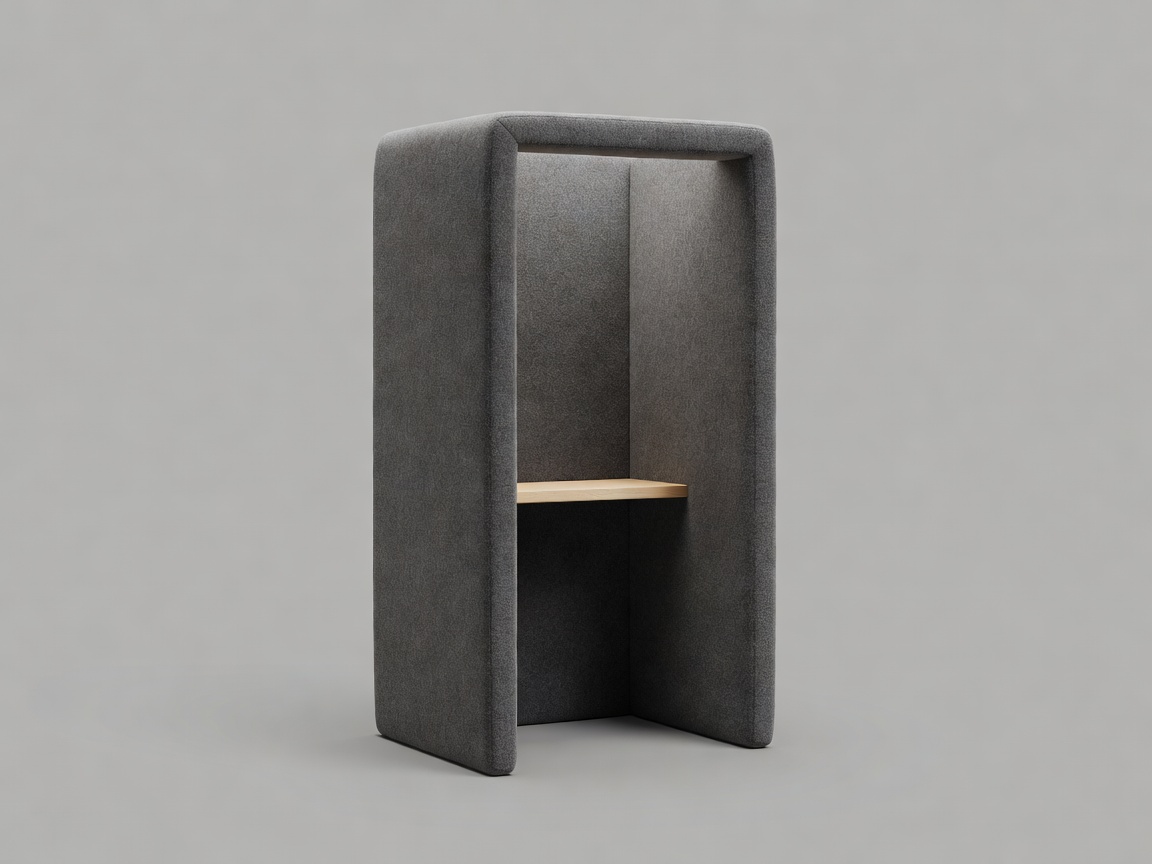
Still, the most reliable approach is a place for calls: a small room, a booth or simply a corner turned away from focus desks. Make booking easy and avoid long blocks reserved “just in case”.
Signals without friction
Headphones are an ambiguous signal. Some people wear them to concentrate, others to listen to music during routine work, and others because of sensory sensitivity. Rather than reading meaning into them, agree one clear, optional signal, such as a desk flag, a small lamp or a status in your chat tool. Make it equally acceptable not to use it. The signal should invite a delay, not forbid contact; urgent questions still need a route.
Households and home workers
At home, the “team” may be a partner, children or flatmates. The same approach works in a lighter form: a shared calendar of important calls, a closed door that means focus, and a predictable daily rhythm. Writers on attention, such as Cal Newport in Deep Work, describe the value of protected blocks of concentration; Susan Cain's Quiet discusses how differently people respond to stimulating environments. Both are reminders that preferences vary, and that a household agreement should respect everyone who lives there, not only the person working.
Include everyone and review regularly
Acoustic comfort is not the same for everyone. Colleagues who use hearing aids often find reverberant rooms particularly tiring, because reflections make speech harder to separate from background sound. Some neurodivergent colleagues may need quieter positions or predictable routines. Ask people what helps them, privately where appropriate, and build those answers into seating and scheduling.
Finally, treat the agreement as a draft. Repeat the observation worksheet after a month and compare the patterns. If speech near focus desks has decreased but echo remains, the next step is treatment. If problems have moved, the layout may need adjusting. Quiet is not a single installation; it is a practice that the people in the room keep renewing together.